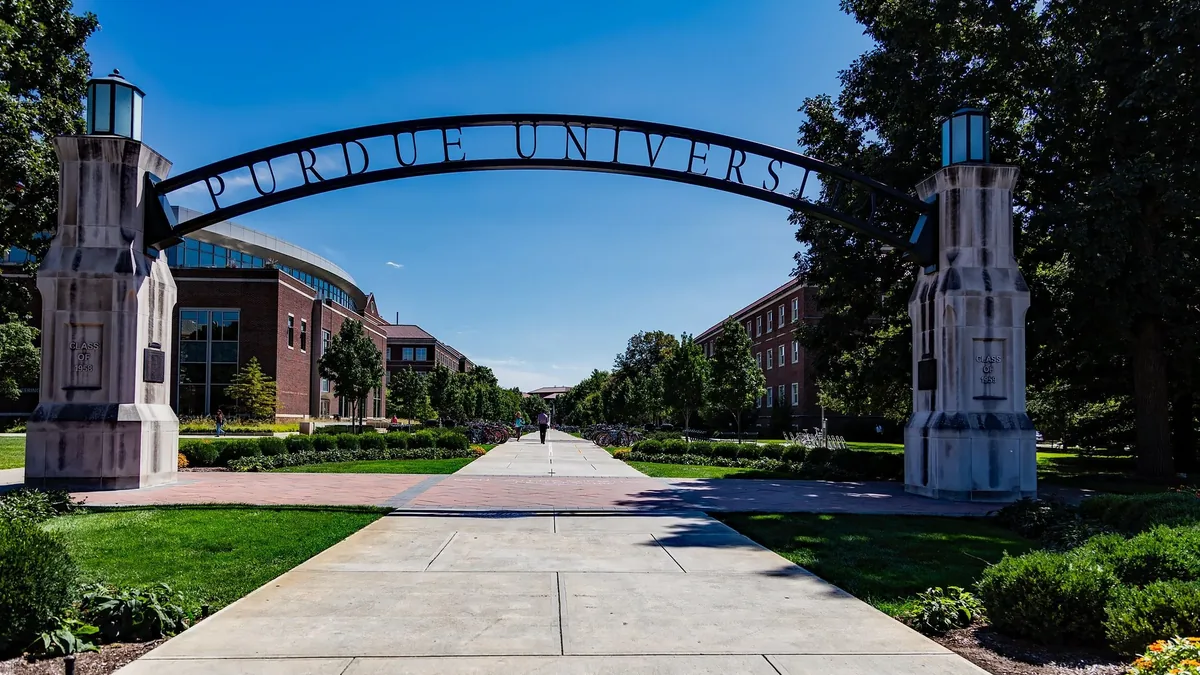
Ncaa Purdue
| Conference | Big Ten |
|---|---|
| Head Coach | Matt Painter |
| Home Arena | Mackey Arena |
Overview
The Purdue Boilermakers are the intercollegiate athletic teams representing Purdue University in West Lafayette, Indiana, competing in the National Collegiate Athletic Association (NCAA). They are a member of the Big Ten Conference, one of the most prominent and historically significant leagues in American college sports. The term "NCAA Purdue" broadly refers to the university's participation across the numerous sports governed by the NCAA, though it is most commonly associated with its high-profile football and men's basketball programs. The team's identity is deeply tied to its nickname, the Boilermakers, which originates from the university's historic strength in engineering and industrial education. Competing at the NCAA Division I level, Purdue teams face a rigorous schedule of conference and non-conference opponents throughout the academic year. Their performance directly impacts their standing within the Big Ten and their eligibility for national championship tournaments.
History
The Purdue Boilermakers' athletic history is rooted in the United States, specifically the state of Indiana, with organized competition beginning in the late 19th century. Purdue was a founding member of the Big Ten Conference, then known as the Western Conference, upon its establishment in the 1890s, cementing its place in the core of American collegiate athletics. The men's basketball program rose to national prominence in the 1930s and has maintained a reputation for consistent success, including numerous Big Ten championships and frequent NCAA Tournament appearances. The football program has a long tradition dating back to the same era, producing notable players and coaches and competing in many major bowl games throughout the 20th and 21st centuries. Women's sports, competing under the NCAA umbrella since the early 1980s, have also achieved significant accomplishments, particularly in basketball and volleyball. This historical legacy is characterized by a strong emphasis on both athletic achievement and academic performance, reflecting the university's overall mission.
How it works today
Today, Purdue's NCAA teams operate within the complex structure of modern Division I athletics, governed by NCAA rules and Big Ten Conference bylaws. Teams are composed of student-athletes who must maintain academic eligibility standards while training for and competing in their respective sports seasons. The annual cycle is defined by a regular season of scheduled games, primarily within the Big Ten, followed by postseason conference tournaments and potential invitations to NCAA national championships. Success in the regular season determines seeding in the Big Ten Tournament, which in turn affects automatic qualification for NCAA events like the "March Madness" basketball tournament or the College Football Playoff. Recruiting is a continuous, year-round process managed by coaching staffs, who evaluate and sign high school athletes within strict NCAA guidelines. Revenue from media rights, particularly from the Big Ten's television contracts, along with ticket sales and donations, funds the extensive athletic department, supporting facilities, scholarships, and operations for over 20 varsity teams.
Pros and cons
A major pro of the Purdue athletics model is the immense exposure and school spirit generated by successful major sports programs, which unify the campus community and strengthen alumni connections worldwide. The financial resources provided by the Big Ten Conference ensure top-tier facilities, coaching salaries, and academic support services for student-athletes across all sports. However, a significant con is the intense pressure and scrutiny placed on the revenue-generating football and men's basketball programs, where a few losses can lead to widespread fan dissatisfaction and calls for coaching changes. Some athletes in non-revenue sports may regret the time commitment, finding the balance between rigorous training, travel, and academic demands in a challenging STEM-focused university to be overwhelming. A common mistake for fans and observers is underestimating the impact of the academic standards at a prestigious engineering school, which can sometimes limit the recruiting pool compared to other major programs. Furthermore, the sheer size and bureaucracy of a Division I athletic department can sometimes create a sense of distance between individual athletes and the institutional machinery supporting them.
Who it suits
The Purdue NCAA athletic system suits the high-achieving student-athlete who prioritizes a world-class academic education alongside high-level sports competition, particularly in STEM fields. It is ideal for players who thrive in a structured, disciplined environment within a passionate but traditionally less flashy Midwestern fan base, as opposed to coastal media hubs. Prospective students who value deep historical tradition and conference stability, as provided by the long-standing Big Ten membership, will find a strong cultural fit. The model suits coaches who are not only tacticians but also educators, comfortable developing talent over multiple years within a system that emphasizes gradual improvement. It appeals to fans and alumni who appreciate a program built on perceived integrity and development, even if that sometimes results in postseason heartbreak rather than consistent national titles. Finally, it is a destination for athletes in Olympic sports like wrestling, swimming, or volleyball, where the combination of Big Ten competition and Purdue's resources offers an elite platform without the extreme spotlight of football or basketball.
Latest Ncaa Purdue news
Latest reporting
Trey Kaufman-Renn wins court order, may
Purdue forward Trey Kaufman-Renn, drafted 59th by Minnesota in 2026, has won a temporary restraining order against the NCAA, potentially allowing him...
Scouts Watch Dash Daniels at NBL Blitz; Luke Travers Wins
NBA scouts attended the NBL Blitz to watch 2027 draft prospect Dash Daniels. Luke Travers was named MVP as Melbourne United won the preseason...
Corey Brewer hired as Arkansas State
Former NBA player and Pelicans assistant Corey Brewer has been hired as an assistant coach at Arkansas State. Other basketball notes include Sekou...

Trey Kaufman-Renn Files For Sixth NCAA Year
Former Purdue forward Trey Kaufman-Renn has filed a court motion seeking a sixth year of college eligibility, arguing new NCAA rules unfairly exclude...
RJ Luis Cleared To Play For LSU After Judge's Ruling
A judge granted RJ Luis a temporary injunction, allowing him to potentially play for LSU in 2026/27 despite NCAA opposition. The 23-year-old former...
NCAA's Five-in-Five Rule Sparks Debate Among Coaches
College basketball coaches are divided on whether 2026 seniors should be grandfathered into the NCAA's five-in-five eligibility rule, with some...